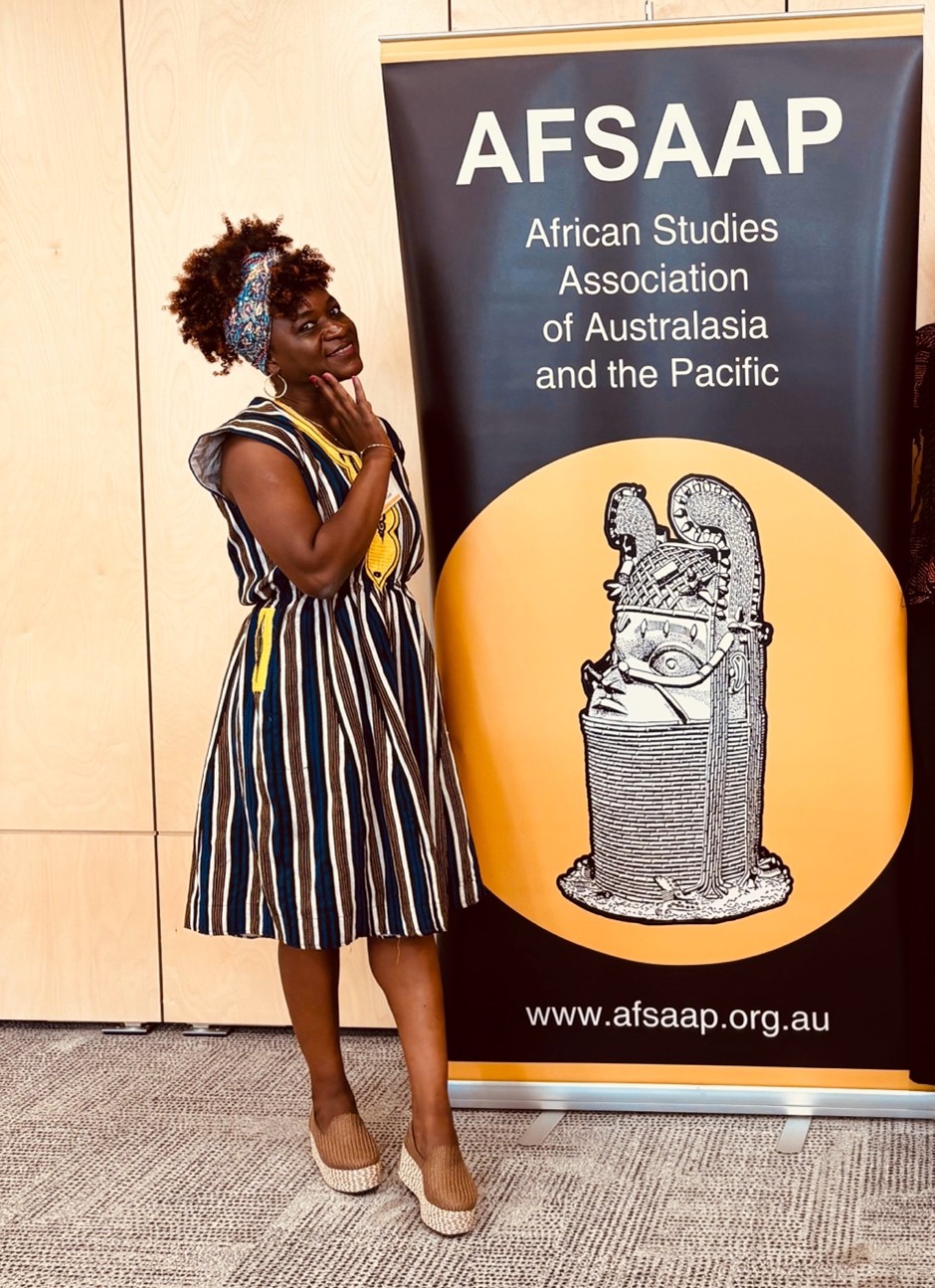
Huzeima Mahamadu, a PhD candidate from Ghana in the Centre for Heritage and Museum Studies at the Australian National University (ANU), has earned an academic recognition through both a major conference presentation and a prestigious research award. Under the supervision of Associate Professor Yujie Zhu, Mahamadu continues to demonstrate her dedication to advancing research and sharing her progress with experts, colleagues, and the public to strengthen its impact.
Mahamadu was selected to present at the African Studies Association of Australasia and the Pacific (AFSAAP) 44th Annual Conference, held at the Australian Catholic University in Blacktown, Sydney, from 27–28 November 2025. The conference, themed Harnessing the African Diaspora to Encourage Reciprocity and Collaboration in Shaping Global Agendas, brought together leading scholars, practitioners, and students to reflect on Africa’s role in global development and the evolving influence of the African diaspora.
Presenting on “Pan-Africanism in the 20th Century: The Successes, Challenges and Lessons for the 21st Century.” Contributing to broader conference discussions, she underscored that African identity is inherently diverse and dynamic. With more than 50 countries, hundreds of ethnic groups, and a diaspora shaped by histories of displacement and resilience, African identity transcends geography. “Africa is not confined to a place—it resides in the hearts, minds, bodies, and souls of its people,” she reflected, echoing Kwame Nkrumah’s famous words: “I am not African because I was born in Africa, but because Africa was born in me,” Mahamadu concluded by calling for strengthened collaboration between Africa and its diaspora to advance shared development goals.
In addition, Mahamadu has been awarded the 2025/2026 Cherry Gertzel Bursary Award for Female Postgraduate Students, an annual and highly competitive AFSAAP award supporting postgraduate research in African Studies. The award will support her upcoming fieldwork in Ghana, where she will collect data for her PhD research on “The Politics of Difficult Heritage in Museums: Slavery History in Ghana.” She also continues to receive support from ANU’s School of Arts and Humanities, empowering her to deepen her research and participation in scholarly exchange.
Image Gallery